Tankless vs. Traditional Water Heaters
What Virginia Beach and Chesapeake
Homeowners Need to Know
Homeowner’s Need to Know:
If your water heater is aging out or you are building a new home in Virginia Beach or
Chesapeake, you have probably already asked yourself the same question most Hampton Roads
homeowners ask:
More Info
Should I go tankless or stick with a traditional tank water heater?
It is a fair question, and the answer is not the same for every household. Both systems will give you hot water. But they do it differently, they cost differently, and they perform differently depending on how your family uses your home. This guide breaks down the key differences so you can make the right call for your home and your budget, whether you are in Chesapeake's Great Bridge neighborhood, a newer build near the Virginia Beach Oceanfront, or anywhere in between.
Ready To Start
Always hiring and always available.
How Each System Heats Your Water
Understanding the core difference between these two systems makes everything else easier to
follow.
More Info
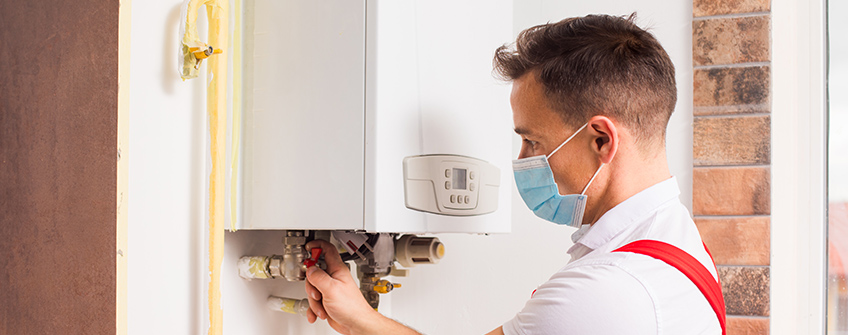
A traditional tank water heater stores a large supply of water, typically 40 to 60 gallons, and keeps it heated around the clock. Whether anyone is home or not, the unit is constantly working to maintain that water temperature. When you turn on the hot water tap, pre-heated water travels from the tank to your fixture.
A tankless water heater takes a different approach. Instead of storing water, it heats water on demand. When you turn on a faucet or shower, cold water flows through the unit, passes over a heating element or burner, and arrives at your tap hot within seconds. Once you shut the water off, the unit powers down completely.
That single difference, stored heat versus on-demand heat, drives most of the contrasts you will
find between these two systems.
Upfront Cost vs. Long-Term Savings for Hampton Roads
Homeowners
This is usually the first thing homeowners want to discuss, and it is worth taking your time here.
What You Will Pay to Install
Traditional tank water heaters cost less upfront. A standard unit and installation typically run between $500 and $1,500 depending on size and fuel type. Tankless water heaters require a larger initial investment, with installed costs generally ranging from $1,000 to $3,500 or more, depending on whether you choose a gas or electric model and whether your home needs updated venting or electrical work.
Read More
Where Tankless Saves You Money Over Time
The higher upfront cost of a tankless system often pays for itself through lower monthly energy bills. According to the U.S. Department of Energy, tankless water heaters can be up to 34% more energy efficient than traditional storage models for households that use 41 gallons of hot water or less per day. For larger households using closer to 86 gallons daily, that efficiency advantage drops to around 14%, but savings are still meaningful over the life of the unit.
Traditional tank water heaters also experience standby heat loss. The water in the tank gradually cools, which means the unit fires back up repeatedly throughout the day, even when no one is using hot water. Tankless systems eliminate standby heat loss entirely, which adds up to real savings on your monthly utility bills over time.
How Hampton Roads Water Quality Affects Your Water
Heater
This is something that does not always come up in generic water heater guides, but it matters for homeowners in Virginia Beach and Chesapeake specifically.
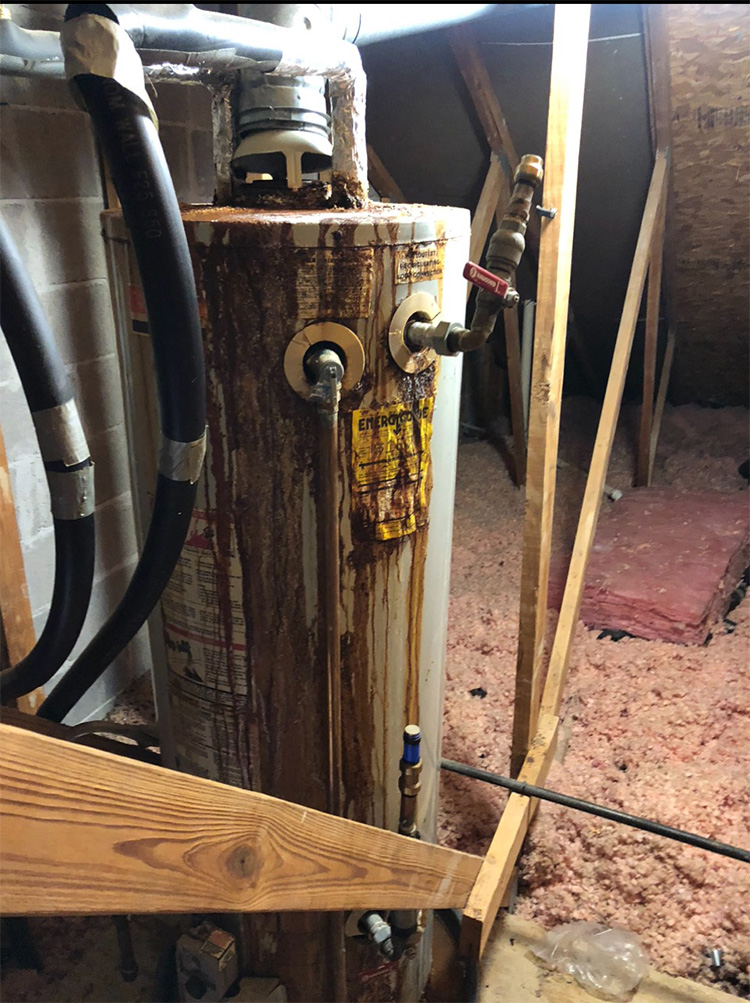
Hampton Roads water is known to carry moderate mineral content. Over time, calcium and magnesium deposits accumulate inside a traditional storage tank, reducing efficiency and eventually contributing to corrosion and early failure. Homeowners in areas like Kempsville,
Great Neck, and the Oceanfront corridor in Virginia Beach, as well as those in Chesapeake neighborhoods like Hickory, Deep Creek, and South Norfolk, have all dealt with the effects of mineral buildup on aging tank units.
Tankless water heaters are not immune to mineral deposits, but they handle it more gracefully.
The system is much easier to flush, and individual components can be replaced withoutswapping out the entire unit. With proper maintenance, a tankless water heater is far less vulnerable to the kind of cumulative damage that shortens the life of traditional tanks in our area.
Our water heater service page covers maintenance options for both system types if you want to dig deeper.
More Info
Lifespan & Maintenance
Which System Lasts Longer in Hampton Roads?
In our humid coastal climate, the lifespan difference between these two systems has significant financial weight:
-
Traditional Tank: Typically lasts 6 to 12 years. The combination of moisture and mineral-heavy water in Virginia Beach and Chesapeake often accelerates corrosion in storage tanks.
-
Tankless Unit: Can last 20 to 30 years. Because individual components are replaceable, many homeowners find this is the last water heater they ever have to buy.
Routine Maintenance Requirements
Both systems require periodic care to handle our regional water quality:
-
Traditional: Requires an annual flush to clear sediment and an anode rod check every few years.
-
Tankless: We recommend flushing every six months due to local mineral content. A technician will also check venting and filters to maintain peak efficiency.
Space & Performance
Space Considerations for Local Homes
Whether you have a compact townhome in Town Center or a sprawling estate in Greenbrier, space matters:
-
Traditional: Requires significant floor space (roughly the size of a large trash can) with specific clearance for ventilation.
-
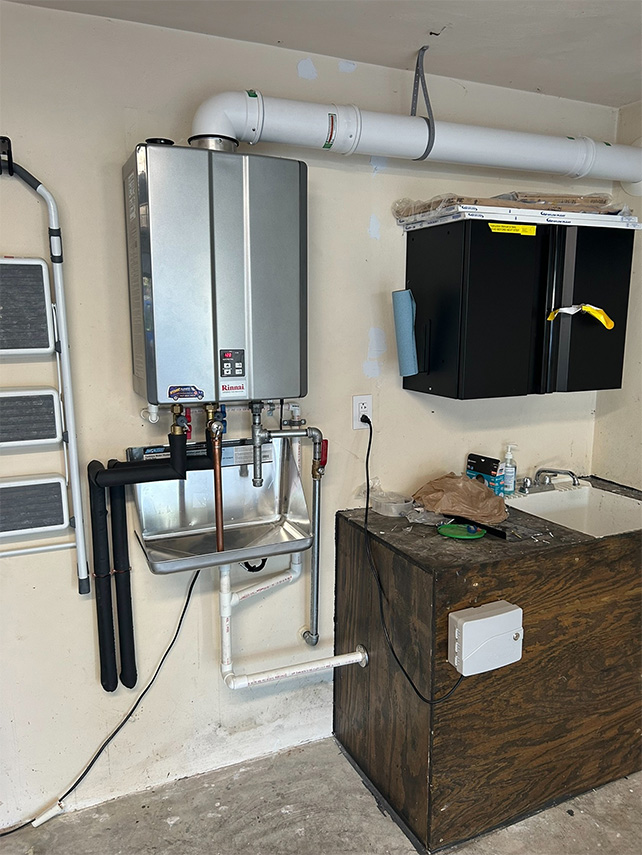
Tankless: Mounts directly to the wall and is about the size of a small suitcase—perfect for tight mechanical rooms or utility closets.
Hot Water Supply & Flow Rate
-
The Tank Constraint (Capacity): Once the stored hot water is gone, you must wait for the tank to recover. This can be a major inconvenience for large families with back-to-back showers.
-
The Tankless Constraint (Flow Rate): While it heats water continuously, a single unit has a limit on how many fixtures it can power at once. For larger homes, we often install a second point-of-use unit to increase capacity and energy savings.
Decision Guide: Which Is Right For You?
| Choose Tankless If... | Stick with Traditional If... |
| You want the lowest long-term energy costs. | You have a tight upfront budget. |
| You have limited utility or closet space. | You need a fast, "plug-and-play" replacement. |
| You want a system that lasts 20+ years. | You have extremely high peak water demand. |
| You are building new or remodeling. | You want to avoid electrical/venting upgrades. |
Trusted Installation in Virginia Beach & Chesapeake
Since 1968, Atomic Plumbing has been the trusted name across Hampton Roads. Our journeyman plumbers bring over 240 combined years of experience to every home.
-
Free Estimates: Available on all larger installations.
-
Financing: Flexible options available for qualifying customers.
-
Guaranteed: We stand behind every job with a 100% satisfaction guarantee.
Ready to upgrade? Contact the team at Atomic Plumbing today to schedule your estimate.
Helping Homes & Businesses
Norfolk Homes Helped
Norfolk Businesses Helped

Free Estimates
Stop drain problems before they start. Call Atomic to schedule preventative or routine maintenance.
Commonly Asked Questions
What Is a Cold-Water Sandwich?
If you’ve ever started your shower with warm water only to get a cold blast for several seconds followed by a gradual warm-up, you’ve tasted a cold-water sandwich. Here’s what happened:
Someone else in your household took their shower first. When they finished, a small amount of hot water remained in the pipes between the water heater and the shower. When you began your shower, you got the leftover or trapped water, so it was still warm. The cold-water blast usually lasts a few seconds before you start feeling warm water again. You can do nothing to prevent the cold-water sandwich other than wait to jump in the shower until the water heater has time to deliver more heated water.
Tankless Water Heater Types
When you’re ready to install a new water heater, you’ll find several different types of hot water tanks. Tankless water heaters come in gas, electric, or solar-powered models. You can also choose between a condensing or non-condensing unit.
Non-Condensing
Most gas-fired tankless water heaters are non-condensing models. Usually, people new to using tankless water heaters go with a non-condensing unit because they can use existing ventilation. Here are few key features to consider:
Uses heat exchangers to heat water
Vents the exhaust outdoors
Requires stainless steel flue pipes
Condensing
Condensing water heaters use less energy and waste less water. Installing a condensing unit may qualify you for a federal tax credit. Features also include:
- Extracts heat from the exhaust and then releases it into the venting system
- No need for flue pipes or venting materials
- Use extracted heat as an additional resource to heat water
Generally, condensing tankless water heaters cost more upfront than non-condensing units. Their lower installation costs and higher energy efficiency mean you pay less overall.
Pros and Cons of Tankless Water Heaters
Each type of tankless water heater has pros and cons you’ll want to consider before committing. Here are a few things to consider when deciding between gas and electric tankless units.
Gas Model Pros
Gas-fueled tankless water heaters heat water more quickly than electric models. They make a sensible choice if you live in an area where natural gas and propane cost less than electricity.
Gas Model Cons
You may pay less for a gas model, but the cost to install it will be higher than an electric model. Gas units require more maintenance. The control panel relies on electricity, so in a power outage, you won’t have hot water.
Electric Pros
You can installed an electric tankless water heater just about anywhere. Because there’s no combustion, you won’t need a ventilation system. Electric models also cost less to install.
Electric Cons
Electric tankless water heaters have a slower heat and recovery rate, so they take longer to deliver hot water. Electric tankless models draw a lot of power—120 to 160 amps—so, you may need to upgrade your electrical panel.
Your plumber can share more information on the pros and cons of each type of water heater. They can also talk about new water heater regulations.